Menu




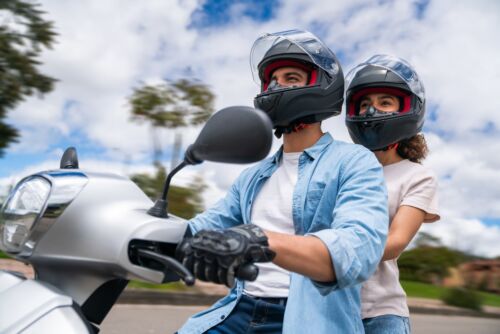
Riding a motorcycle can be an exhilarating way to get around in Alaska, and it can be even more fun when you get to share the experience with a passenger. However, when proper safety precautions aren’t taken, a motorcycling adventure can become dangerous for both the operator and their companion, potentially leading to collisions that result in serious injuries or wrongful death. Failure to take safety measures or operate a motorcycle prudently can also leave you open to a personal injury claim in the event of a motorcycle accident.
When motorcycle riding with a passenger, it’s essential to keep the following tips in mind to keep your passenger safe and avoid the potential for negligence claims:
Not only should the operator of the motorcycle be wearing a helmet, gloves, a jacket, and sturdy footwear, but the passenger must also wear proper apparel to protect against hazards. To be fully protected on the road, both the operator and passenger should wear DOT-approved full face helmets, jackets and pants made with abrasion resistant materials, full-fingered riding gloves, and over-the-ankle footwear. The attire should fit well to ensure it won’t snag on the motorcycle and protect from both the elements and debris from the road.
When motorcycle riding with a passenger, it’s crucial to practice proper braking and acceleration techniques. This can help you remain balanced when you come to a stop or speed up to prevent risk of falling. Be sure to brake well in advance of any traffic lights or intersections to allow for additional stopping distance. Avoid sudden transitions as the lurch of the engine may cause instability for the passenger, causing them to fall.
Communication is key when you are motorcycle riding with a passenger. Since verbal communication may not be possible, it’s important to develop a set of signals so your passenger can get your attention. For instance, a tap on the shoulder may be used to indicate a need to stop, while a strong tap on the back may be used to signal the need to slow down. In addition, since passengers have a different vantage point from operators, allowing them to spot debris and potholes a driver might otherwise miss, being able to communicate these hazards is critical. Some riders and passengers may also use motorcycle intercom systems, which can allow for normal conversation at highway speeds without shouting.
Riding a motorcycle with a passenger requires preparing the vehicle for additional weight. Notably, the presence of a passenger changes how the motorcycle responds on the road and requires deliberate adjusting to maintain a safe and predictable performance. In addition to causing the motorcycle to sag, added weight can negatively impact braking, acceleration, and compromise stability. Increase tire pressure, adjust the suspension, and take any other necessary measures to optimize the vehicle’s handling and prevent accidents.
Proper maintenance of the vehicle can help keep both you and your passenger safe by preventing sudden mechanical failures at high speeds, ensuring responsive handling, and maintaining optimal stopping power. Regular maintenance of components such as the tires, brakes, and suspension can drastically reduce the risk of crashes caused by loss of vehicle control and provide more stability when carrying an extra person.
One of the most important things you can do as a motorcycle operator to keep your passengers safe is to avoid any distractions. This can help preserve your reaction time for sudden hazards and ensure you execute controlled braking. If you use a navigation system, make sure it is voice activated so you do not have to take your hands off the handlebars and you can keep your eyes focused on the road ahead.
Motorcycle safety courses can train you in how to operate your vehicle and avoid accidents. They teach you how a passenger should mount, sit, and move with you as the operator. These courses also focus on defensive driving, training in emergency maneuvers, and allow you to practice in a controlled environment to get used to balancing the motorcycle under various conditions. You will also learn how to scan the road for hazards and how to execute cornering techniques so your passenger feels stable, rather than feeling as though the vehicle is swaying.
If you were injured in a motorcycle accident caused by another’s negligence, you may be entitled to pursue a personal injury claim to recover your damages. Proudly serving accident victims in Anchorage, Soldotna, Kenai, Palmer, Fairbanks, Juneau, Wasilla, and other areas of Alaska, The Trial Guy, Eric Derleth, provides reliable representation for clients facing a wide range of personal injury matters, including those involving tourist accidents. Call 907-262-9164 to schedule a free consultation at our Anchorage or Soldotna office, or contact us online. Our phone lines are open 24 hours a day, seven days a week.
© 2026 Eric Derleth - Trial Lawyer, Inc.|Legal Disclaimer|Privacy Policy